Why Invest? Saving, Inflation and the Case for Putting Money to Work
Learn the difference between saving and investing, why inflation matters, and how compounding works, with simple Ghanaian examples. Saving keeps money available for the things you will need soon. Investing is for money you can leave alone for years, because it seeks income or growth in return for extra risk. This first article explains the difference, so that every later part of the series makes sense.
By Luther King · 16 October 2026
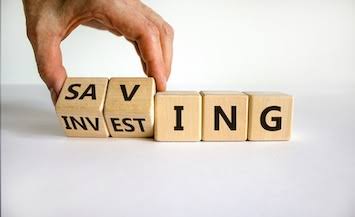
Saving and investing are different jobs
Saving means setting money aside where you can reach it when you need it: a bank account, a mobile money wallet, even cash at home. The goal is availability. Saving is not risk-free, though. Cash can lose purchasing power, cash at home can be lost or stolen, and a deposit depends on its provider and on any deposit protection that applies.
Investing means putting money into something such as a share, a bond or a unit trust, hoping it will grow in value or pay you income. The trade-off is that its value can also fall. There is no investment without some risk.
Both have a place. Rent due in three months, school fees, an emergency fund: that money belongs in savings. Money you will not need for several years is a better candidate for investing, because a longer horizon makes short-term ups and downs easier to live with. Time does not guarantee that a share, a company or a market will recover.
Why money sitting still can shrink
Prices tend to rise over time. That is inflation, and it means the same cedis buy less. Here is a made-up example (the rates are invented, not current Ghana rates):
Inflation is 15% over one year.
Your savings earn 4% over the same year.
GHS 10,000 becomes GHS 10,400, but in starting-year money it buys only about GHS 9,043. That is a real return of about minus 9.57%.
Now picture Kojo, an invented young professional in Accra who pays rent, transport and family costs from his salary. If he keeps GHS 10,000 in cash for five years, the note still says GHS 10,000, but it may buy noticeably less rice, transport and data. Investing is one way people try to keep their money growing at least as fast as the cost of living. It carries risks of its own.
Compounding: returns that earn returns
Compounding happens when the returns you earn stay invested and start earning returns themselves. With shares, that can include reinvesting dividends. New contributions are separate: they add money, they are not returns.
A hypothetical illustration: GHS 1,000 growing at a constant 8% a year for ten years becomes GHS 2,158.92. That assumes every return is reinvested, nothing is added, nothing is lost, and there are no fees, taxes or inflation. Real returns vary and can be negative, so treat this as a picture of the mechanism, not a forecast.
Risk and return go together
Investments that offer the chance of higher returns usually carry a higher risk of loss. That is a tendency, not a rule, but it explains why chasing the biggest number you can find is a bad plan. A Treasury bill issued by the Government of Ghana carries different risks from a share in a listed company, and a sensible investor weighs them differently.
Investing is not gambling, and it is not guaranteed
An investment should have an identifiable asset, a reasoned expectation of income or growth, and risks you can explain. Buying a share purely on a rumour can still be speculation. Research and discipline improve your process, but they cannot remove the possibility of loss.
The short version: keep near-term money in savings, think about investing only the money you can leave alone, and expect risk to come with any chance of growth.
Next in the series: Part 2, Your Investment Options in Ghana. $MTNGH $ACCESS $CAL
This article is for education only. It is not personalised investment advice, and it is not financial, tax or legal advice. Investing involves risk, including the possible loss of money, and past performance does not guarantee future results. Rules, charges and data change, so confirm current details with the Ghana Stock Exchange, the Securities and Exchange Commission (Ghana), the Central Securities Depository (Ghana) and your own licensed broker before acting. GSE Monitor is a market-information and portfolio-tracking product, and buying or selling shares still requires an account with a licensed broker.
Keep learning
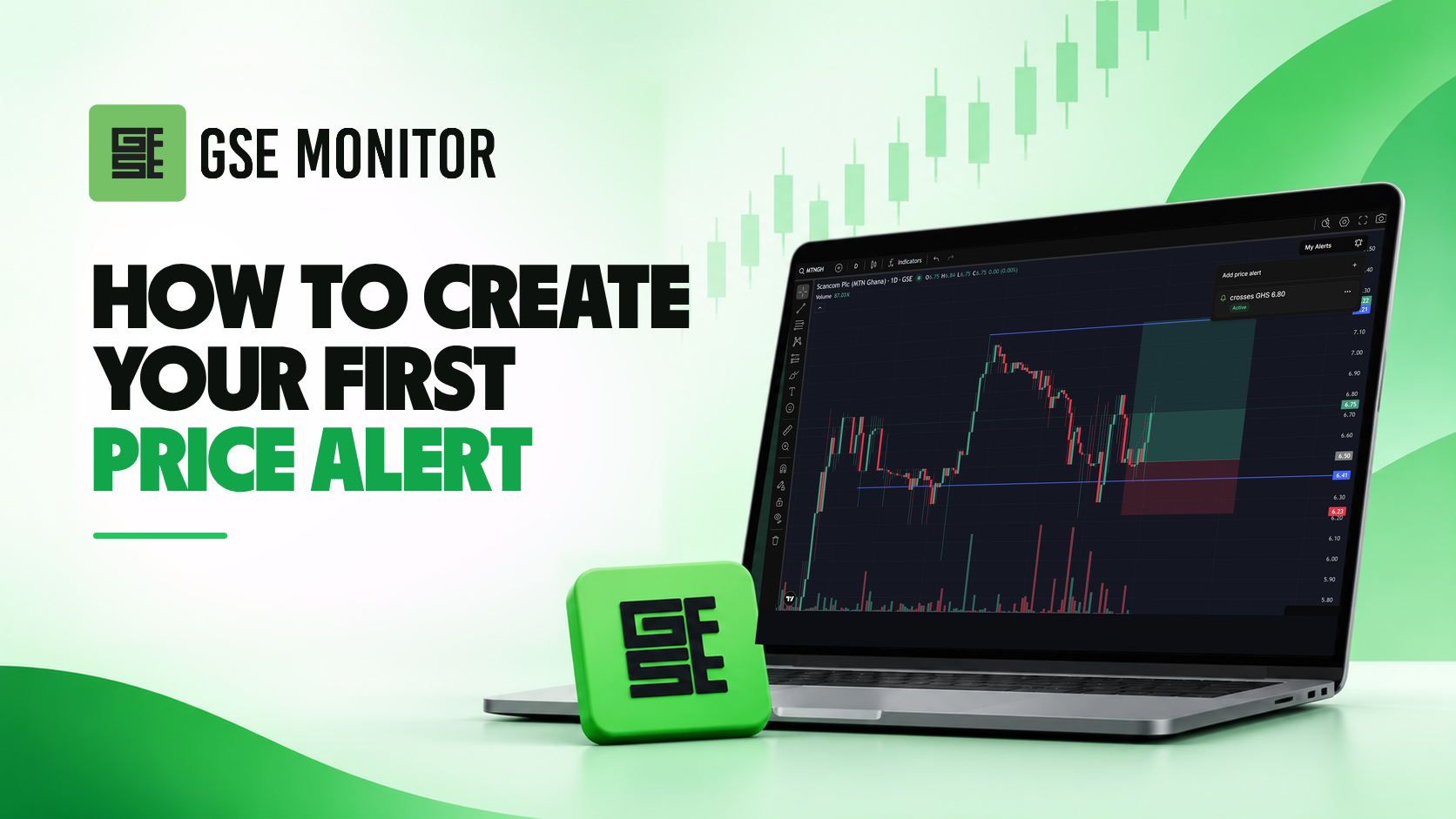
How to Create Your First Price Alert on GSE Monitor
A price alert emails you when a stock reaches the price you care about, so you do not have to keep checking the chart. You set it up in under a minute from the Charts page on GSE Monitor. This guide uses MTNGH as the example. The same steps work for any stock on the Ghana Stock Exchange.
Mistakes beginners make in the Ghana stock market
Mistakes beginners make in the Ghana stock market

Building your first portfolio and managing risk
Building your first portfolio and managing risk