What Is the Ghana Stock Exchange and How Does It Work?
A beginner's guide to the Ghana Stock Exchange: what a share is, how prices and indices work, and how trading happens. The Ghana Stock Exchange (GSE) is the organised marketplace where shares of Ghana's listed companies are bought and sold under a common set of rules. This article explains the pieces you will keep meeting: shares, prices, market value, indices and trading.
By Luther King · 16 October 2026
A short history
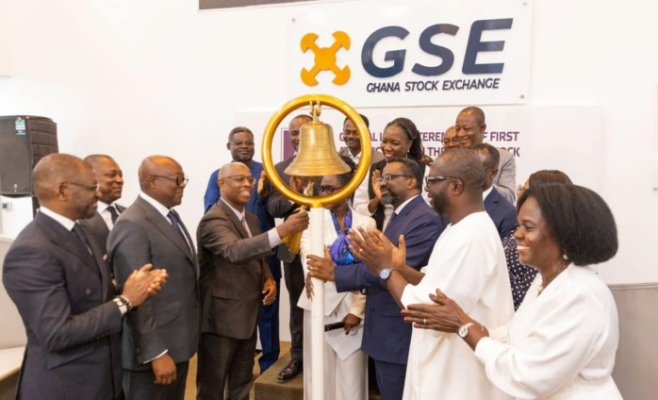
The GSE is headquartered in Accra. It was incorporated in July 1989, recognised as an authorised stock exchange in October 1990, and trading began on 12 November 1990.
Two equity markets
The GSE has two equity listing markets. The Main Market has more demanding listing requirements. The Ghana Alternative Market (GAX) was created for small and medium-sized businesses, with simpler requirements and lower costs. The wider exchange also runs fixed-income and other markets. Companies listed on the GSE span banking, insurance, manufacturing, mining, telecoms and agribusiness. We do not quote a company count here, because the official directory contains duplicate share classes and changes over time. Check the GSE's dated issuer list for the current number, and remember that "listed" does not mean "actively traded".
What a share is
A share is a unit of ownership in a company. Suppose a company has issued 100 million ordinary shares and you own 1,000. That is 0.001% of the company's ordinary shares. Your voting and dividend rights depend on the share terms. You receive a dividend only if one is declared and you qualify for it. Shareholders have a residual claim after creditors, not a guaranteed slice of each year's profit.
Primary and secondary markets
The primary market is where new securities are sold, for example in an Initial Public Offering (IPO). An IPO can include newly issued shares, existing shares sold by current shareholders, or both, so it matters who receives the money. MTN Ghana's 2018 prospectus is a documented example: it offered shares at GHS 0.75 each and combined new shares with existing shares from a selling shareholder.
The secondary market is everyday trading between investors on the exchange's electronic system. In a normal trade the company is not involved: you buy from another holder, and your payment generally goes to that seller.
Prices and market value
A last-traded price records a completed trade, and it can be stale if a share trades rarely. Buying and selling prices on offer can differ, so a price on screen is not a promise that your order will fill there. The GSE's published closing price uses a volume-weighted average of the day's trades.
Market capitalisation estimates the market value of a company's outstanding equity: price per share multiplied by shares outstanding. It is different from accounting equity and from enterprise value, which also considers debt and cash. It is one rough way to compare company sizes.
Sectors and indices
Listed companies are grouped into sectors such as banking, insurance and telecoms. The GSE publishes two benchmark indices. The GSE Composite Index (GSE-CI) is a market-capitalisation-weighted index of eligible ordinary shares under the GSE's methodology, which excludes companies whose shares are also listed on other markets. The GSE Financial Stocks Index (GSE-FSI) covers eligible financial-sector shares. Both started on 31 December 2010 at 1,000.
Index levels change daily. Whenever you compare performance, note the start date, end date and index definition, and whether dividends are included.
How trading works
Trading runs electronically through an Automated Trading System on exchange business days, normally from 10:00 to 15:00 Ghana time. Check market notices for exceptions. Your broker enters your order and it is matched against opposing orders.
The short version: the GSE is the marketplace, shares are slices of ownership, and a price on a screen is a record of the last deal, not a guarantee.
Next in the series: Part 4, Who Does What in the Market.
This article is for education only. It is not personalised investment advice, and it is not financial, tax or legal advice. Investing involves risk, including the possible loss of money, and past performance does not guarantee future results. Rules, charges and data change, so confirm current details with the Ghana Stock Exchange, the Securities and Exchange Commission (Ghana), the Central Securities Depository (Ghana) and your own licensed broker before acting. GSE Monitor is a market-information and portfolio-tracking product, and buying or selling shares still requires an account with a licensed broker.
Keep learning
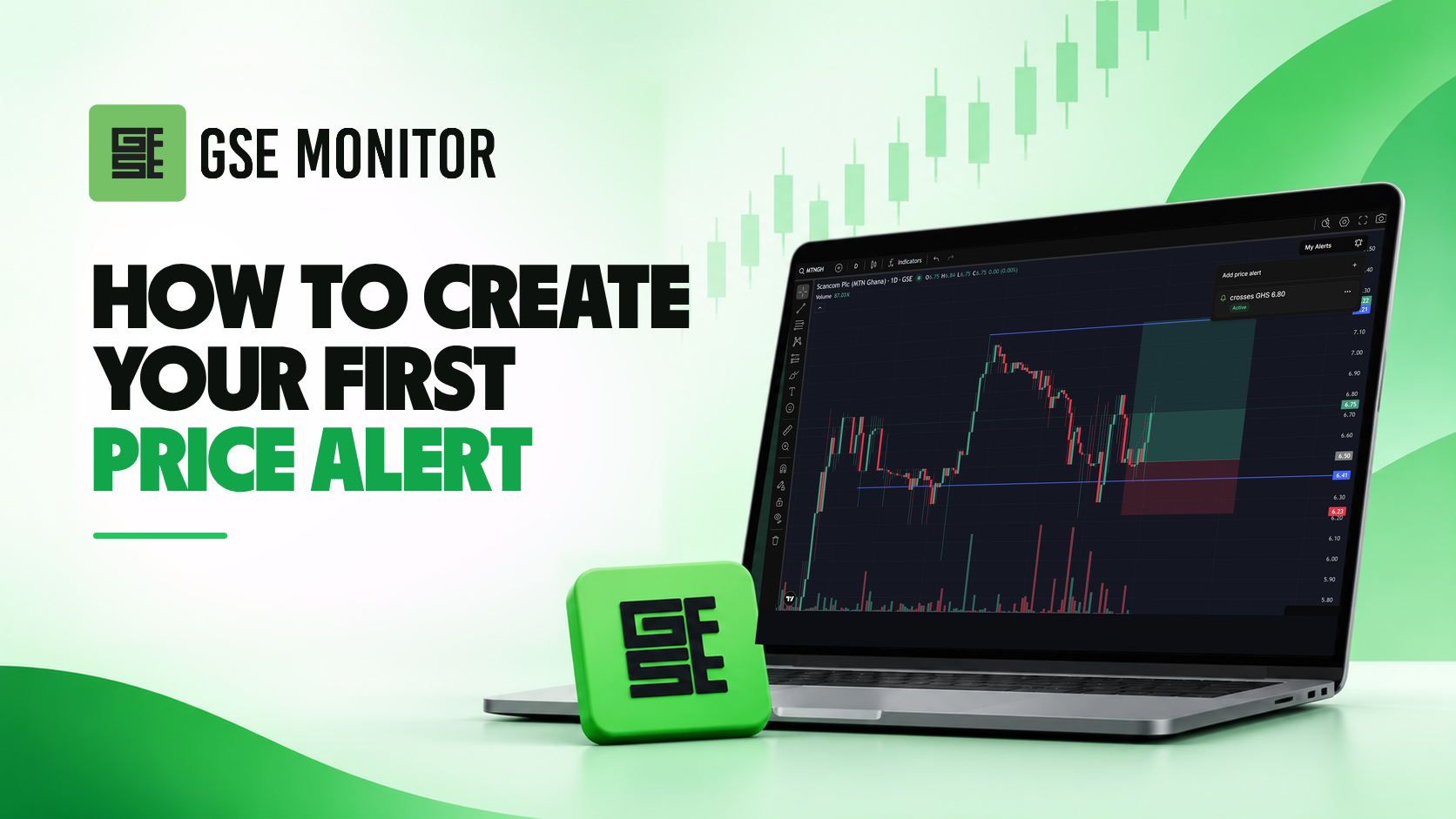
How to Create Your First Price Alert on GSE Monitor
A price alert emails you when a stock reaches the price you care about, so you do not have to keep checking the chart. You set it up in under a minute from the Charts page on GSE Monitor. This guide uses MTNGH as the example. The same steps work for any stock on the Ghana Stock Exchange.
Mistakes beginners make in the Ghana stock market
Mistakes beginners make in the Ghana stock market

Building your first portfolio and managing risk
Building your first portfolio and managing risk